
Early influences & business curiosity
Growing up amid the development of Taiwan’s manufacturing, electronics and export sectors prompted an interest in company growth, industry competition and capital flows.
莊曜珩
From Taiwan equities and industry analysis to AI high-frequency trading and financial data technology. A research journey grounded in market observation, model validation and risk awareness.

Research helps us understand markets.
It also reveals the limits of our judgment.
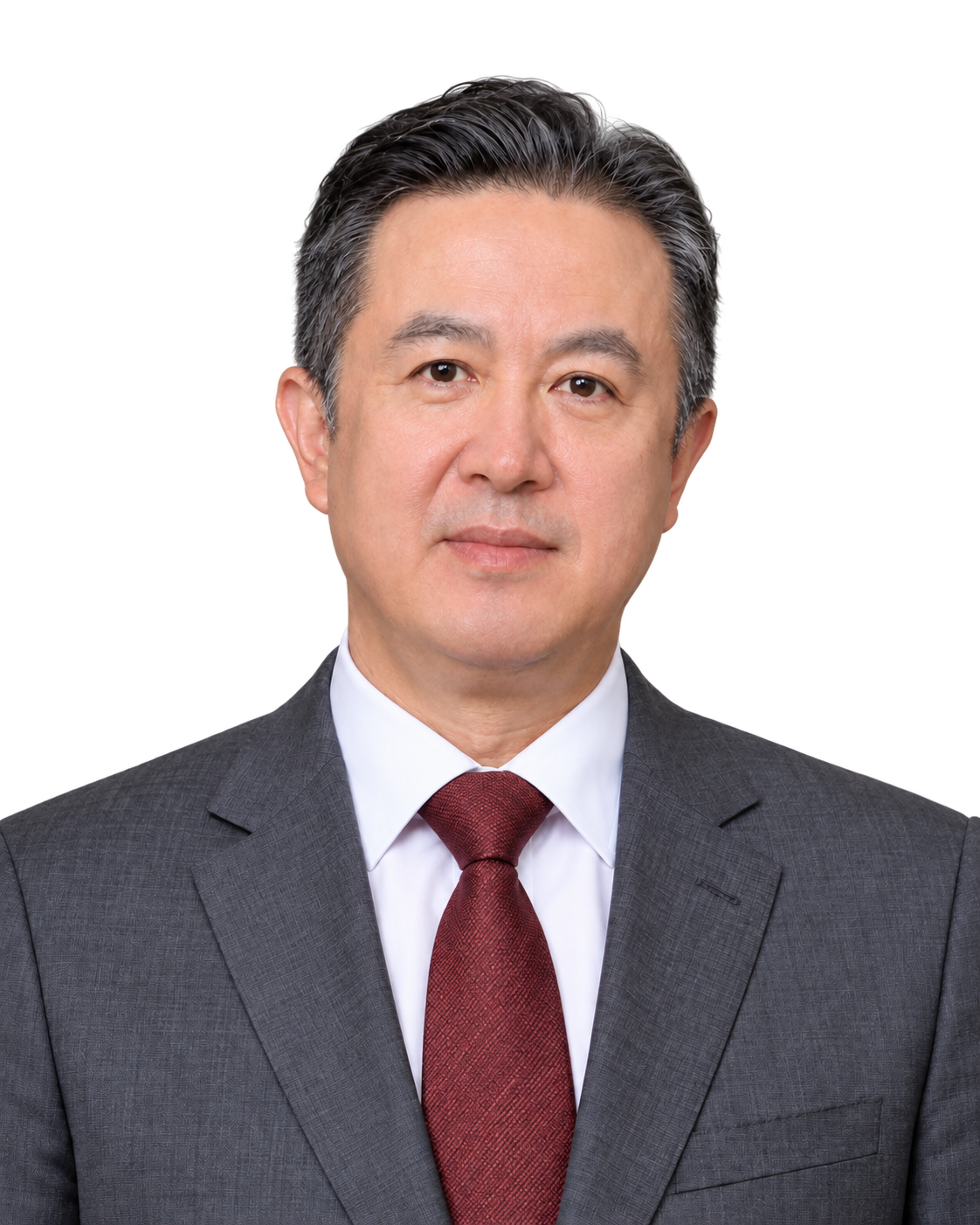
Born in Taiwan in 1971, Yao-Heng Chuang has a longstanding focus on capital markets and financial technology research. He is a co-founder of Kerui Capital Ltd.
Beginning with equity and industry analysis, his work expanded into international futures, foreign exchange, global macro, algorithmic models and financial data technology. Research evidence, historical validation and risk management remain closely connected.
His current focus is AI high-frequency trading research: market microstructure, execution and real-time risk monitoring over shorter time horizons, alongside the application of data and modeling capabilities to business settings.
Consider data, models and trading conditions together to understand the assumptions behind every research conclusion.
Price movements are considered alongside the conditions in which trading occurs. Liquidity, participant behavior and the wider market environment provide essential context for short-horizon research.
The research draws on prices, volumes, macroeconomic and industry information, including structured and unstructured sources. Meaning, timing and processing methods matter before a model can be evaluated.
Keep complete records, including counterexamples, and compare results across historical periods. Backtesting requires interpretation in light of market context, data limitations and actual execution conditions.
Revisit assumptions when volatility, correlations or trading behavior changes. Ongoing observation and model updates keep research open to challenge from new information.
From equity analysis to high-frequency trading, one principle endures: every judgment should have a clear research foundation.
Record data sources, research conditions and processing methods.
Retain evidence that challenges an assumption as well as evidence that supports it.
Understand the environments in which a method applies—and where it may fail.
Reassess conclusions as new data and risk observations become available.
Growing up amid the development of Taiwan’s manufacturing, electronics and export sectors prompted an interest in company growth, industry competition and capital flows.
At 18, he began following business and financial information, observing Taiwan share prices and trading activity to explore how information, expectations and participant behavior interact.
Taiwan equity studies combined financial statements, industry and operating information with prices and volumes, while considering how experience, emotion and information processing affect judgment.
Analysis expanded to revenue, raw-material prices, interest rates, exchange rates and international capital flows, connecting company value with industry cycles and market conditions.
The Asian financial crisis sharpened his attention to currency, financing and liquidity risk, including the cost of mistaken judgments, potential losses and the conditions in which assumptions can fail.
Research extended into futures and derivatives, considering volatility, leverage, cross-asset pricing and trading behavior, together with applications of mathematical and statistical methods.
The research scope broadened to U.S. equities, international futures, FX and global macro, examining how rates, the dollar, energy and monetary policy affect capital flows, business costs and valuations.
Digital tools helped organize historical prices, volumes, volatility and market cycles, making it possible to revisit, compare and test research views across different periods.
Experience-based investment reasoning was translated into explicit, comparable research conditions, with complete records and counterexamples helping avoid conclusions based only on selected successes.
The financial crisis deepened the focus on changing correlations, liquidity and model failure, including risks that emerge when assumptions about normal markets cease to hold.
Trends, volatility, unusual trading activity and cross-asset relationships were described through data, with attention to whether the same hypothesis could be repeatedly tested across environments.
The process connected data acquisition and preparation, feature analysis, hypotheses, historical validation and risk assessment, while reviewing market conditions and the applicability of methods.
Work in automated trading, backtesting and risk models used software for ongoing information processing, with greater attention to defining research questions, designing models and evaluating their reasoning.
Research into market classification, feature identification, anomaly detection and risk analysis incorporated market states, contextual differences and model applicability into more detailed assessment.
Prices, trading activity, macro and industry data were combined with exploration of structured and unstructured information, while reviewing historical comparability, anomalies and model reliability.
Market data, algorithmic models and risk management became core directions, linking collection, cleaning, storage, feature analysis, modeling, strategy validation and monitoring.
As the volume of market information grew, he considered how research validation and technical infrastructure could work together, turning accumulated methods into sustainable organizational capabilities.
He co-founded Kerui Capital Ltd., focusing on capital market research, financial data and algorithmic technology as prior research experience developed into team-based, systematic workflows.
Early work connected data acquisition, cleaning, storage and analysis with modeling, strategy validation and risk control, emphasizing data quality and clearly reasoned research.
The process linked feature analysis, modeling, backtesting, risk analysis, real-time monitoring and updates, with stress tests, unusual scenarios and comparisons across market cycles.
Research explored information beyond prices, volumes and macro data, connecting features, validation and risk identification while considering applications in business settings.
Data technology projects and collaboration with broadcasting-related and other businesses extended analysis to content distribution, viewing trends, user behavior and decision support.
Capital markets provided questions and context, algorithms provided analytical methods, and data infrastructure supported the process, while the limitations of data and models remained part of evaluation.
The long-term framework connected capital market research, algorithmic technology and data infrastructure, emphasizing accumulated data, repeated model validation and reassessment as conditions change.
Market observation, algorithmic methods and risk management extend to shorter time horizons, focusing on orders, transactions, liquidity, trading costs, execution quality and real-time risk monitoring.

Through an Asia-Pacific research perspective, connect U.S. and Taiwan equities, regional economies, international futures, FX and global macro while preserving an understanding of companies and industries.
Company financials, industry cycles, prices and trading activity.
Listed companies, valuations and the market environment.
Volatility, leverage and cross-asset price relationships.
Interest rates, the dollar, energy and monetary policy.
Regional policy, technology supply chains and cross-market information.
Data capabilities also extend to broadcasting and enterprise applications, including content distribution, viewing trends, user behavior and decision support. Each setting begins with understanding what its data means and how it will be used.
He is Co-founder and Chief Investment Research Officer of Kerui Capital Ltd., and Asia-Pacific Chairman, with a focus on capital market research, AI high-frequency trading and financial data technology.
Starting with Taiwan equities and industry analysis, his research expanded to U.S. equities, international futures, foreign exchange and global macro, with attention to trading conditions, capital flows and risk relationships.
The work focuses on short-horizon market microstructure, orders and transactions, liquidity, transaction costs, execution quality and real-time risk monitoring.
Data and models support comparison, analysis and validation. Defining research questions, understanding data, interpreting results and assessing risk still require clear reasoning and ongoing review of model limitations.
Historical validation, stress testing, extreme-scenario analysis and ongoing monitoring examine liquidity, volatility and conditions under which models may fail. New observations feed back into the research process.
Related capabilities extend into enterprise data applications, including content distribution, viewing trends and user behavior in broadcasting, as well as information processing and decision support.
Explore professional dialogue around AI high-frequency trading, market data, algorithmic research and enterprise data applications.